
During my pregnancy, I searched for reports of what to expect—and, more specifically, what I could realistically achieve if I wanted to get back to creating art as soon as possible and continue working toward making a living from it while caring for a newborn at home.
How long can I continue tattooing during pregnancy? When will I be able to draw again? When can I start selling my work again?
What follows is an honest account of my own experience. I focus solely on my personal emotions and perceptions, presented in the form of a diary with words and sketches:

The Final Trimester of Pregnancy
Am I going to die?
A thousand things still need to be done. Half of them probably won’t get finished.
Uncertainty. The final days before my C-section.
Pain in my hands and feet. I feel like a dragon—my throat burns, and every time I burp it feels as though smoke is rising from inside me. Endless heartburn, day and night. Everything is difficult.
Pelvic girdle pain makes lying down, walking, and even turning over another source of agony.
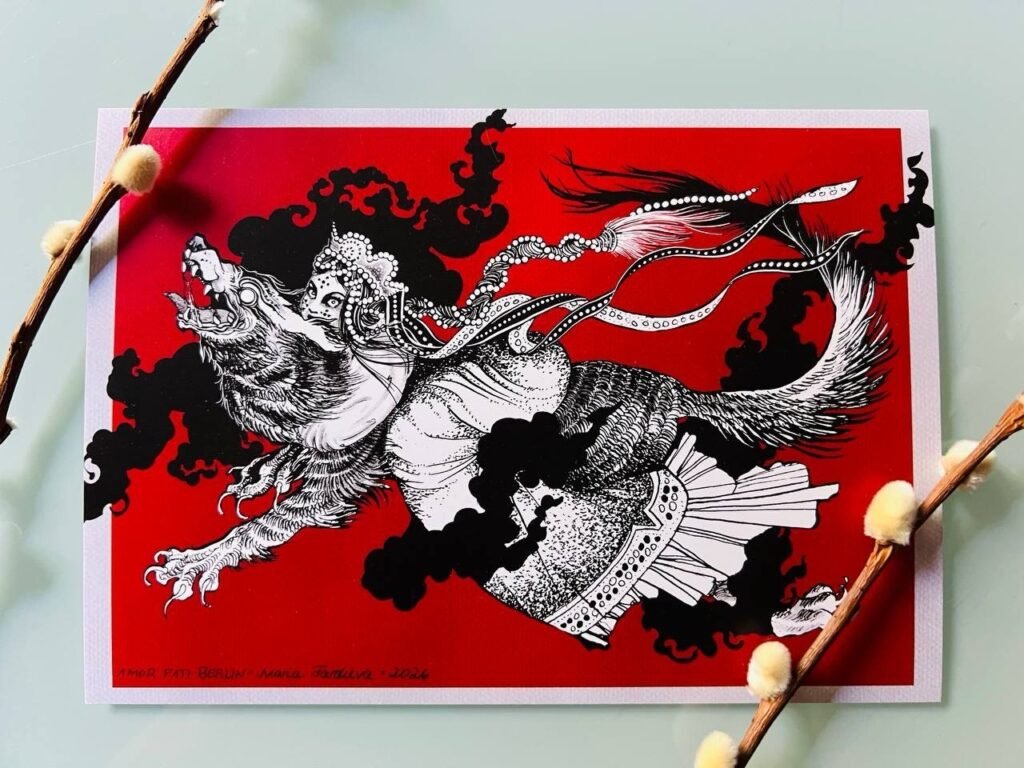
I’ve managed to make only a handful of sketches recently—among them this one, Milk and Blood, the beginning of a new cycle.
The last trimester is where things truly become difficult.
Every woman experiences pregnancy differently, but what affected me most were my swollen hands and feet. My husband calls me Lady Fat Hands, and I laugh every single time he says it.
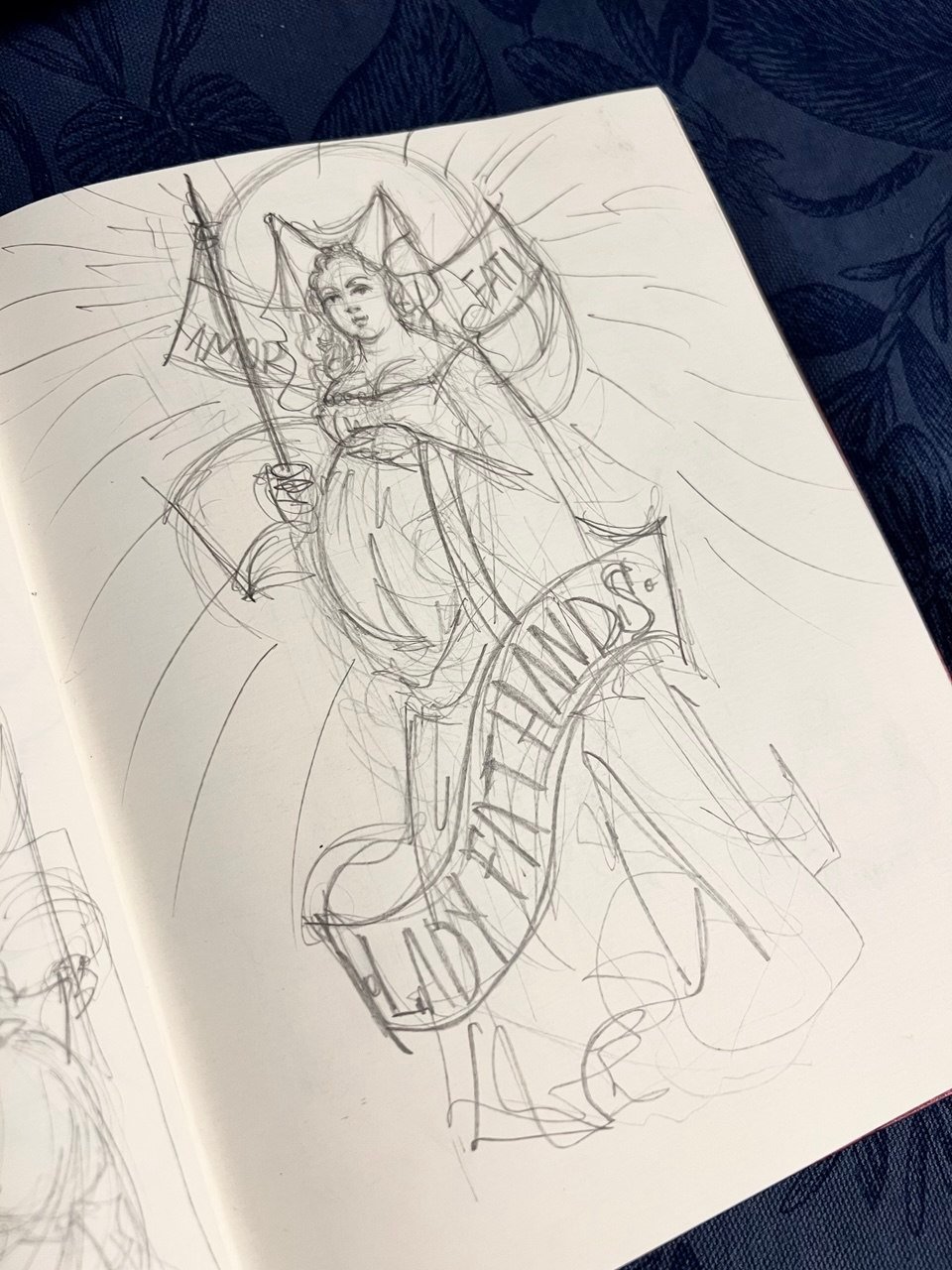
My fingers feel as though they’ve been dipped into hot wax. They tingle like an arm that’s fallen asleep, and every now and then they simply go numb.
I had to stop tattooing sooner than I wanted to admit to myself.
Even holding a pencil has become nearly impossible.
Two Weeks After Birth
The swelling is slowly going down, but my hands and fingers are still numb and tingling.
I’m beginning to dare to draw again—provided my sleep-deprived brain is capable of it.
Sometimes the baby cries for hours. We’re helpless, desperate, performing the endless dance of possibilities: changing diapers, carrying, rocking, bouncing…
We dance the same dance forward and backward.
There is no time. For anything.
Your body shrinks because you stop eating. Hunger and thirst fade into the background.
Everything fades into the background.
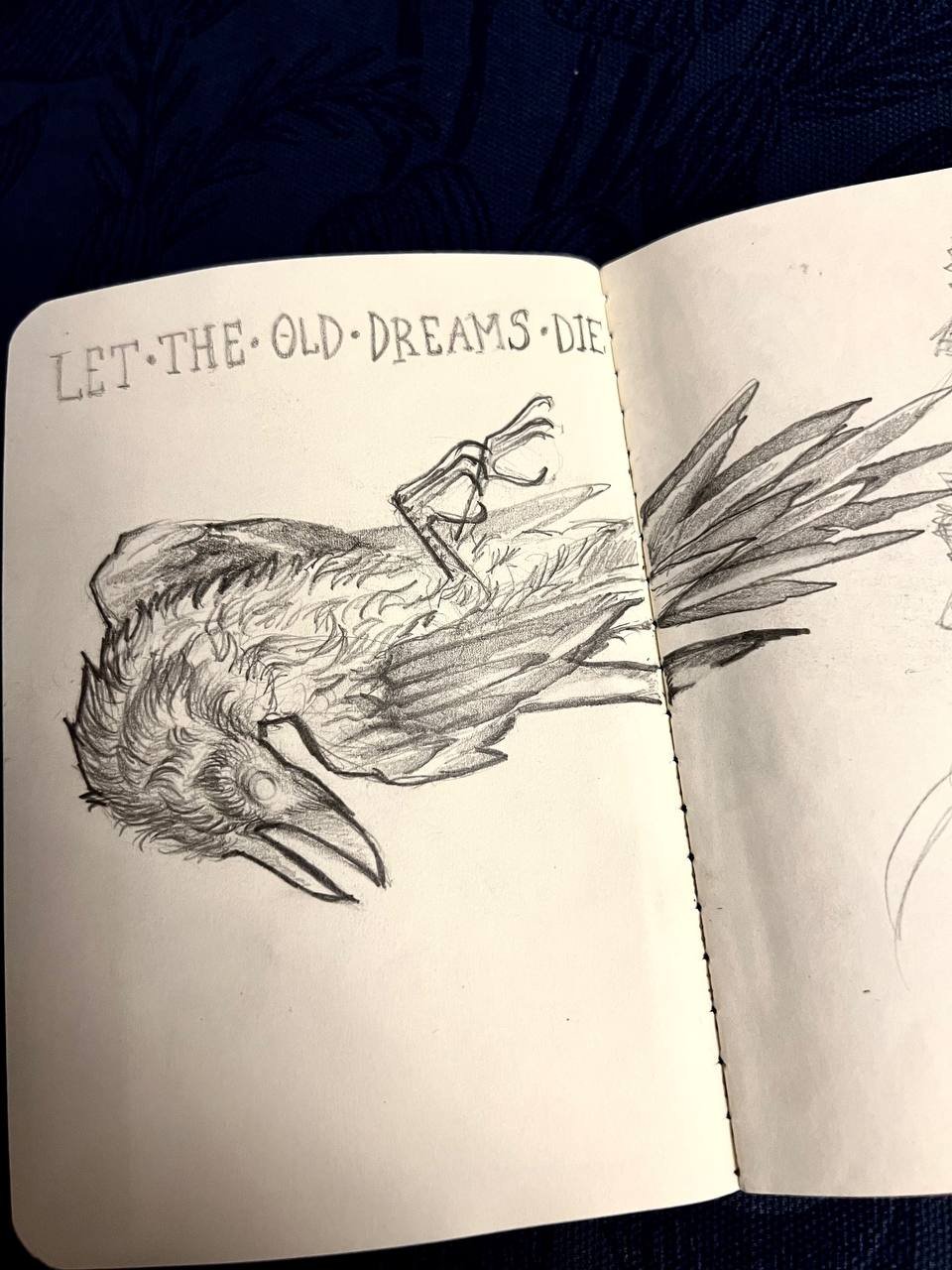
People keep saying, “Let me know if you need anything.” ….But I can’t.
I don’t have time to check my phone, coordinate who might bring us what, ask for help, negotiate schedules, or organize anything. I barely manage to eat or drink myself.
I smell of old blood that keeps flowing from my body, and milk is constantly dripping everywhere—onto the floor, onto my clothes, onto the baby. Explaining my life to other people is no longer an option.
I’m not resentful. I simply feel ashamed when I think of all the mothers I wasn’t able to help during their own postpartum period. You simply don’t know what it’s really like until you’ve lived it.
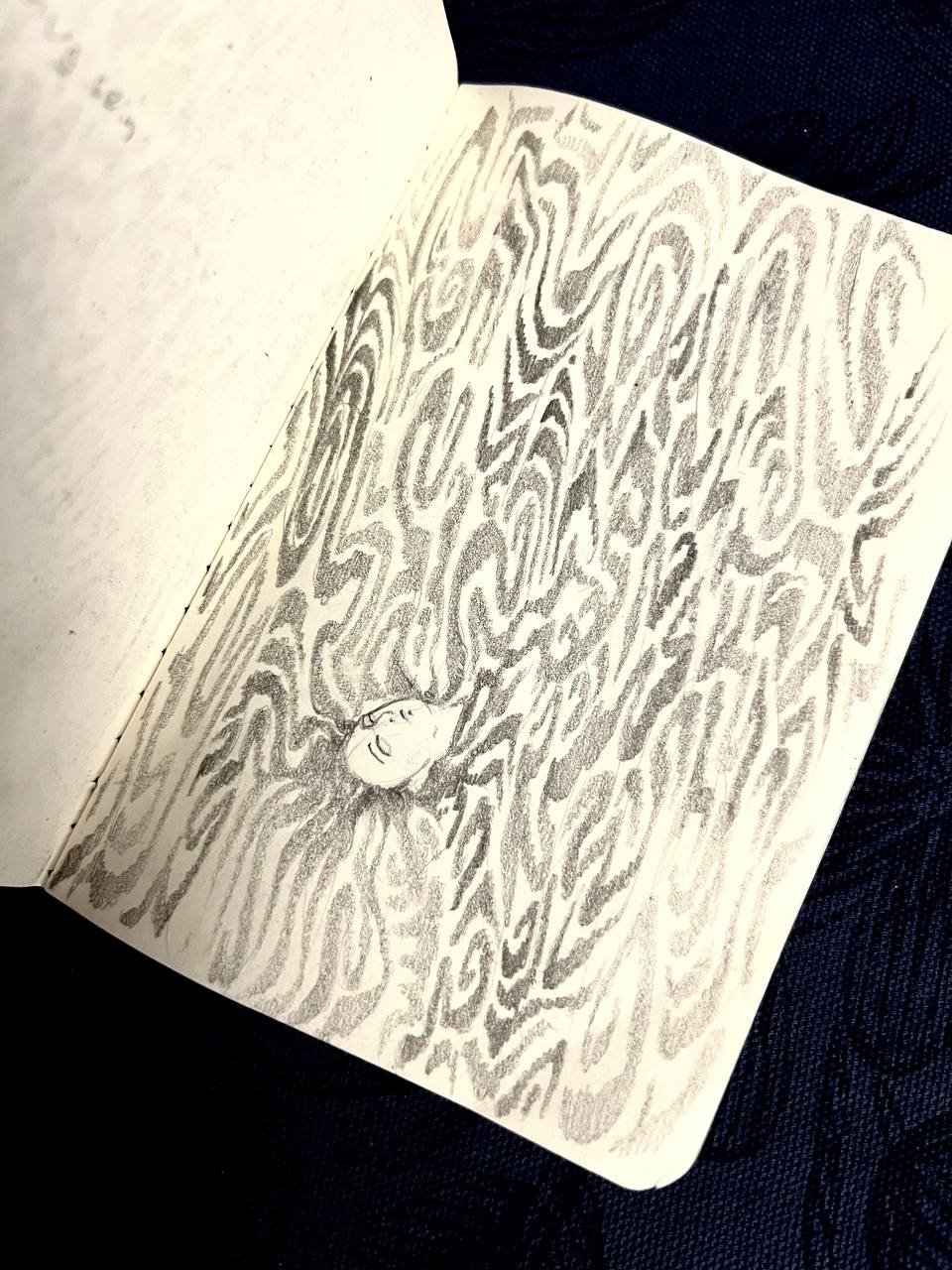
In the few free minutes I have, I do nothing but stare at a blank sheet of paper through overwhelming exhaustion.
“Sleep when the baby sleeps,” everyone says.
And yet the fear of sudden infant death hangs over you like a waiting catastrophe, ready to appear the moment you finally surrender to sleep yourself—defenseless, relieved, unconscious.
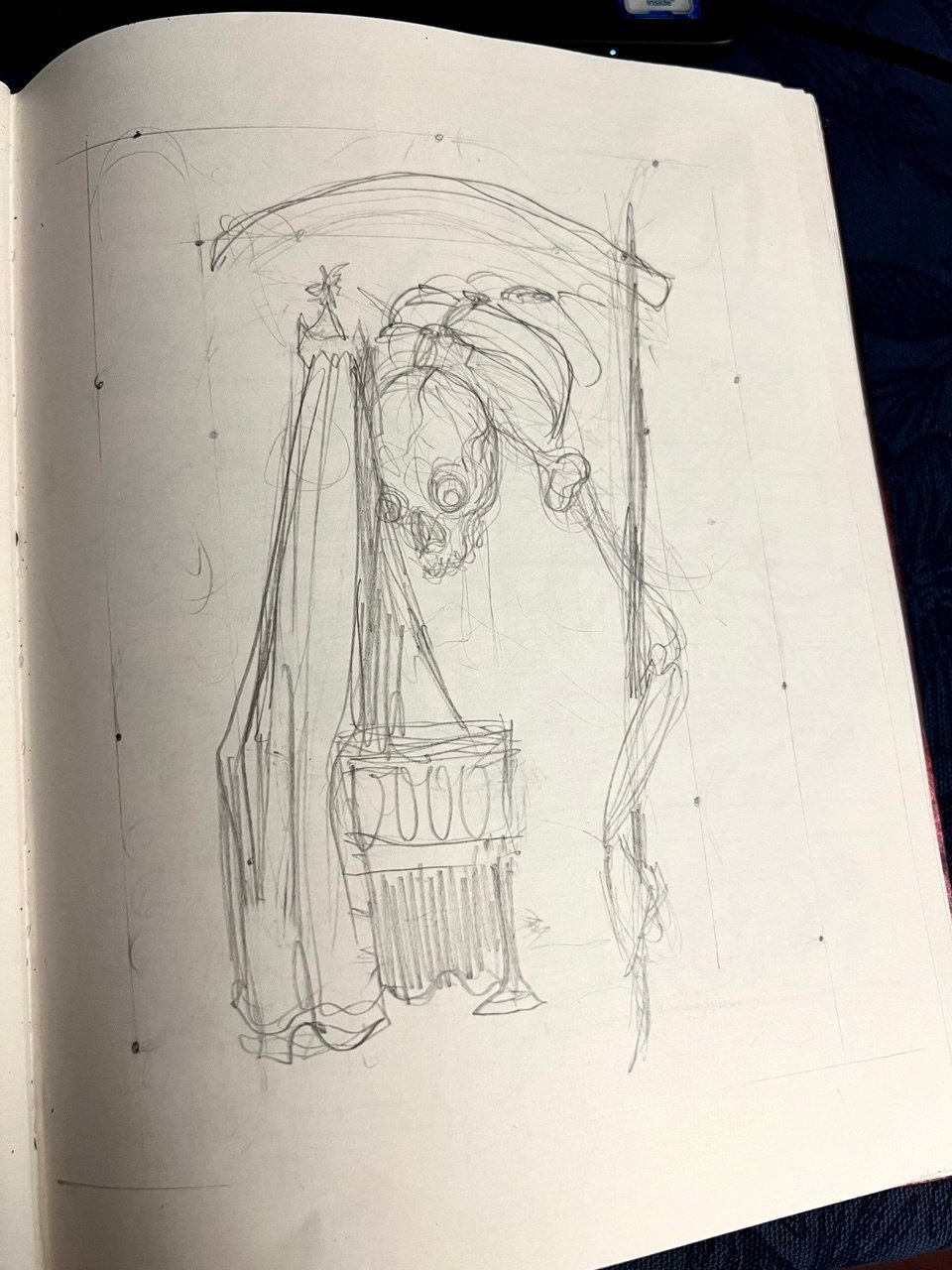
Three Weeks After Birth
It feels as though you’re slowly dissolving. Everything that once made you who you were begins to disappear. You’ve already spent nearly a year giving up one vice after another, and now even more is stripped away from you. For the time being, your partner is gone. There is no lying quietly together anymore. Tension replaces tenderness. You no longer find comfort in each other’s arms, because that’s where the baby is now.
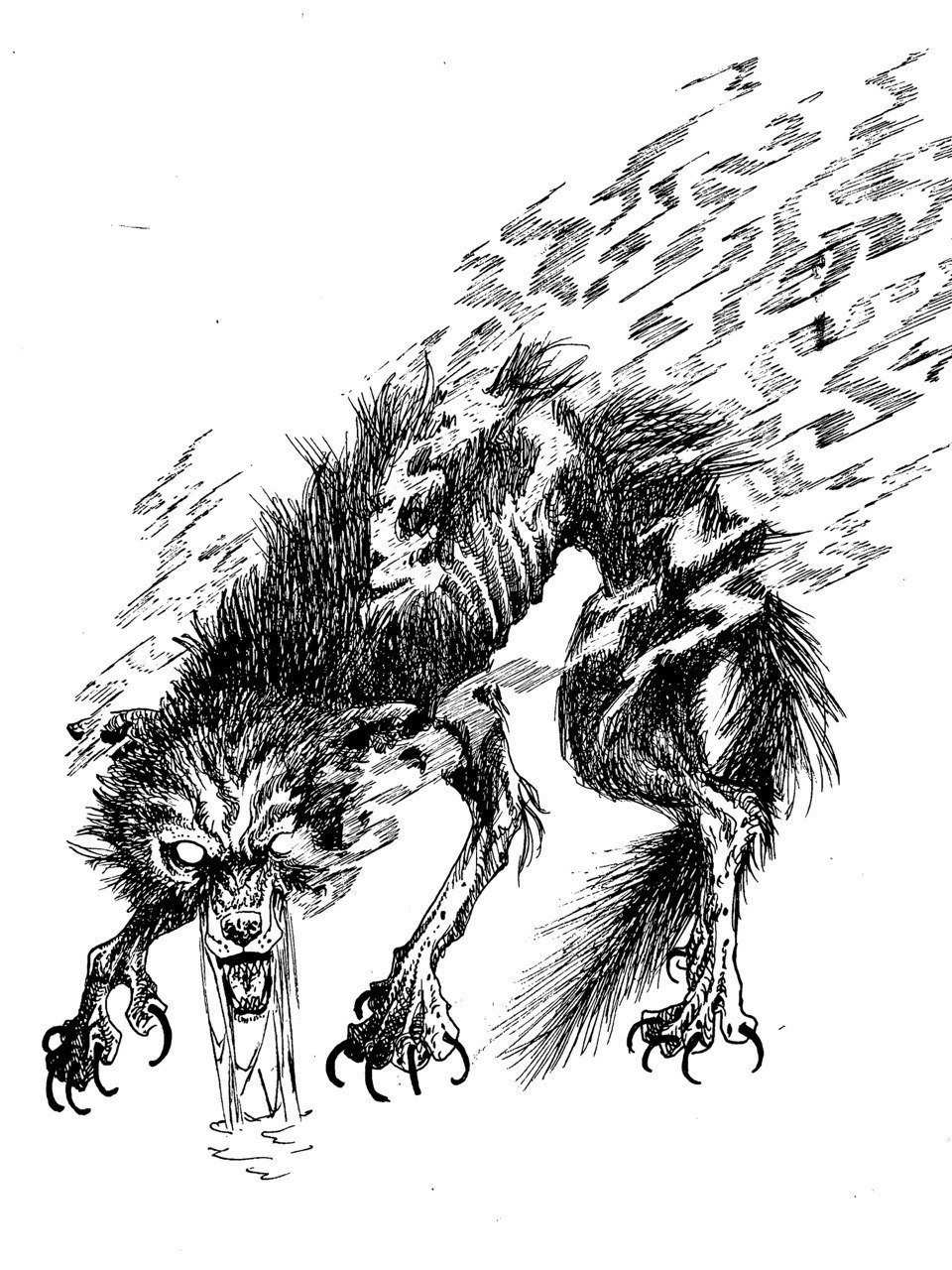
Every eye is fixed on the child, and it feels as though you yourself are fading away. What did you do with your life before? It no longer matters. There is neither time nor energy to care about anything else.
More and more pieces of yourself go up in smoke. You simply disappear.
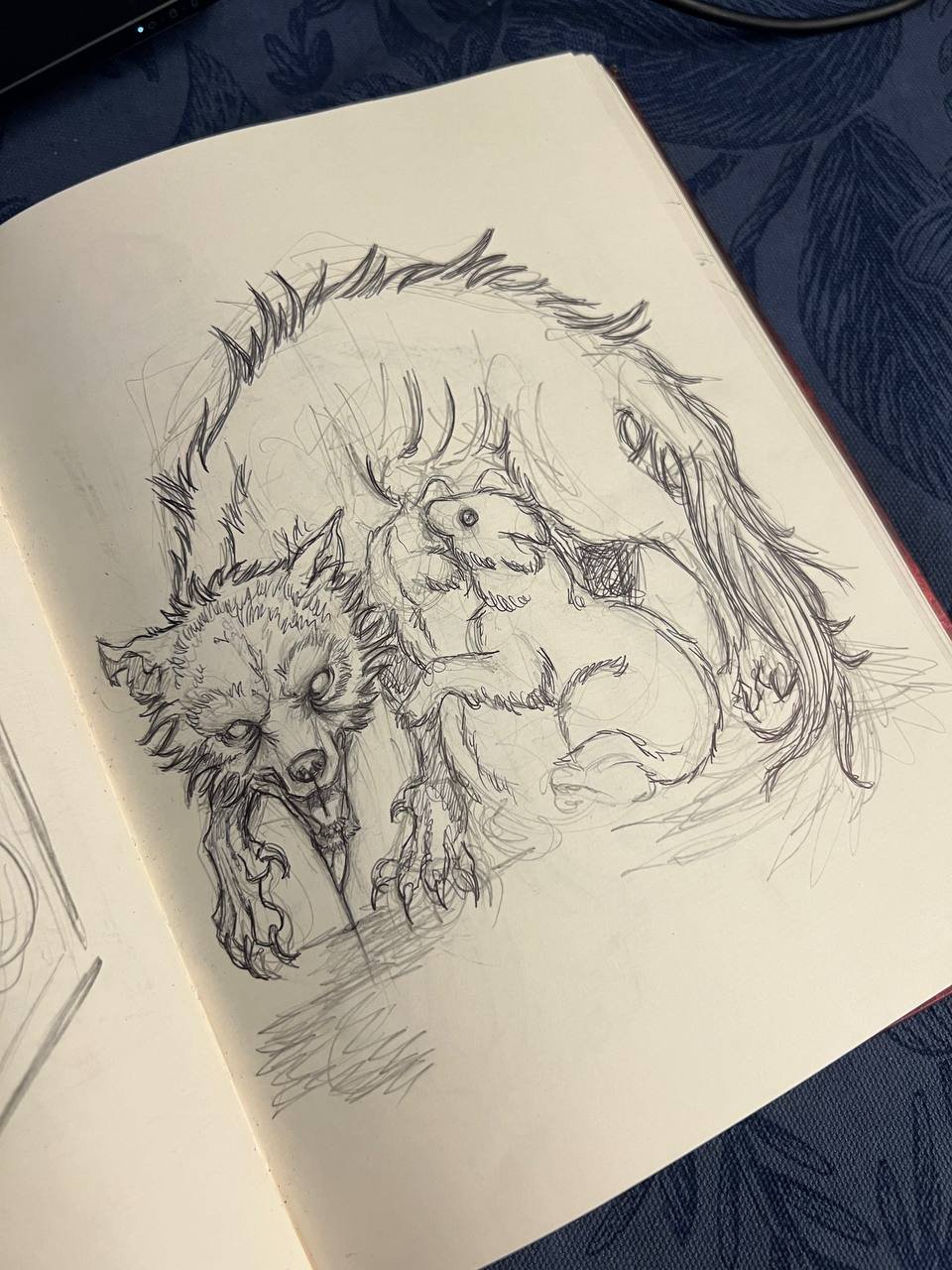
Four Weeks After Birth
The baby is sleeping for longer stretches now. Little by little, more spare minutes begin to accumulate throughout the day. Not many. But enough—thanks to my husband—to leave the house now and then and have a coffee by myself at the bakery around the corner.
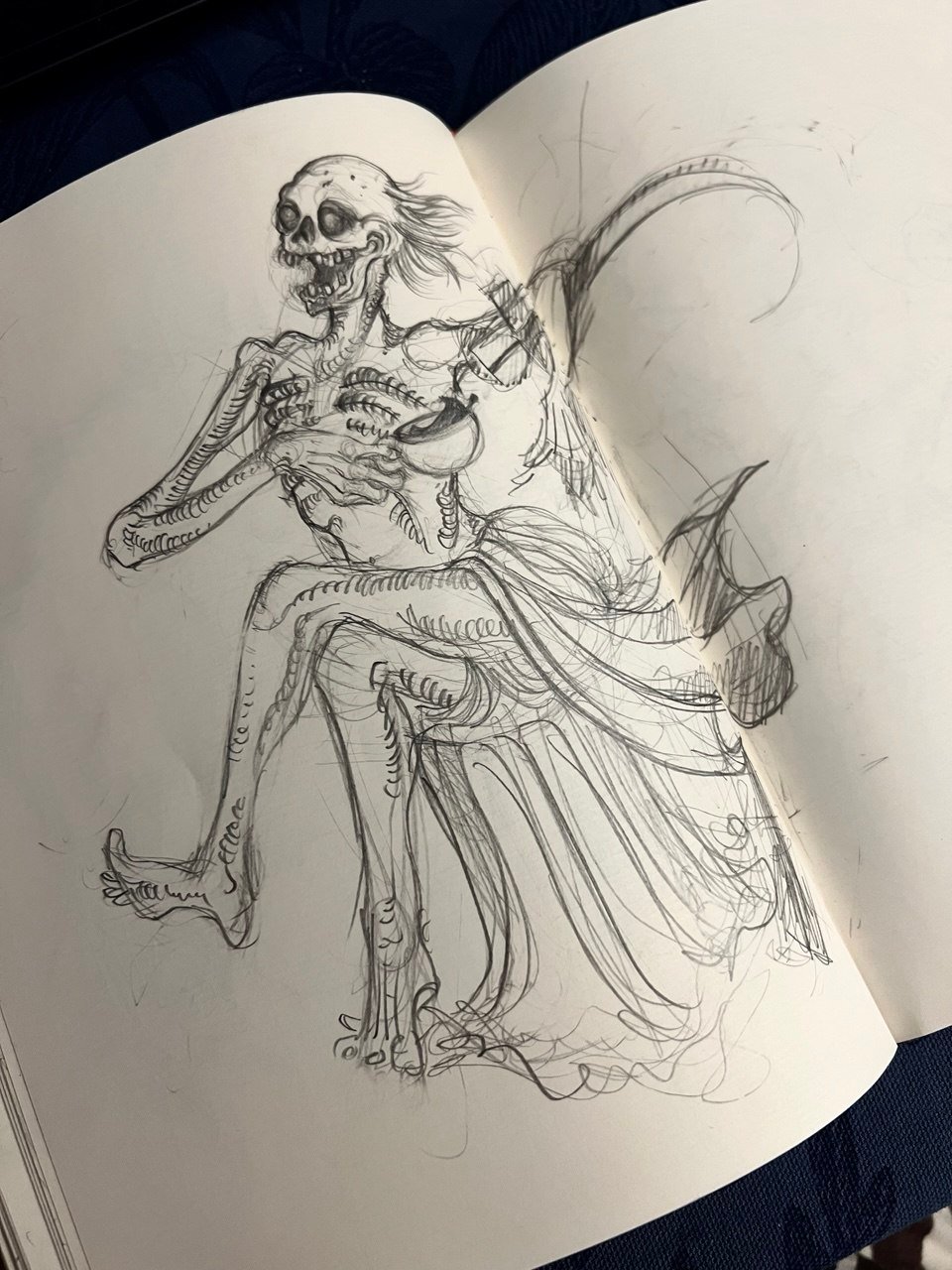
The first few times felt like such an incredible high.
This must be what the dead feel like when they’re brought back to life.
The nights remain short. Even when the baby manages to sleep, they still need to be breastfed every two to three hours. And then, suddenly, my knees begin to hurt like hell. Every time I bend them. Day and night.
But with time it gets a little easier—or rather, a little less hellish—especially once you’re finally able to catch up on an hour or two of sleep here and there. Without my husband, this would be impossible. How do single parents do it?
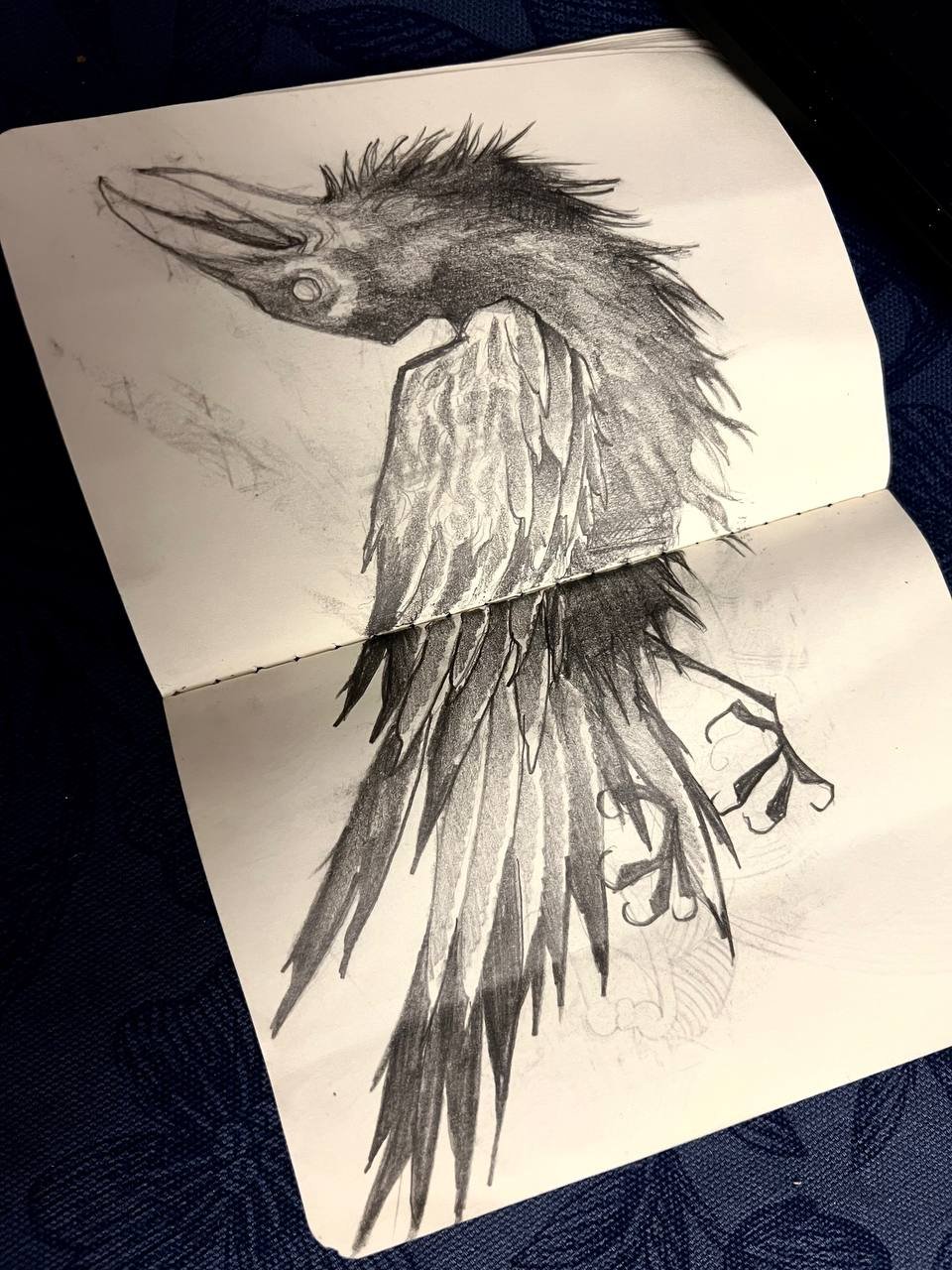
I’ve managed to throw together a few sketches. After only a few minutes, the familiar tingling and numbness return. But there’s less despair in my life now.
Hope begins to appear.
Eight Weeks After Birth
Slowly, we’re finding a rhythm. Slowly—and with constant interruptions. Sleeping beside the baby would drive me insane. You never truly sleep; one eye is always open. So we’ve settled into a shift system. From 8 p.m. until around 3, 4, or even 5 in the morning, I’m on duty. How long depends entirely on how demanding the baby is and when my partner wakes up. Once we switch over, I get to sleep until around noon—of course with interruptions for breastfeeding. Most days I manage to pump enough milk for one extra bottle, which means I sometimes get the luxury of four uninterrupted hours of sleep. Around midday, my partner usually squeezes in a short nap of his own, and then we share the remaining hours together until my evening shift starts again.
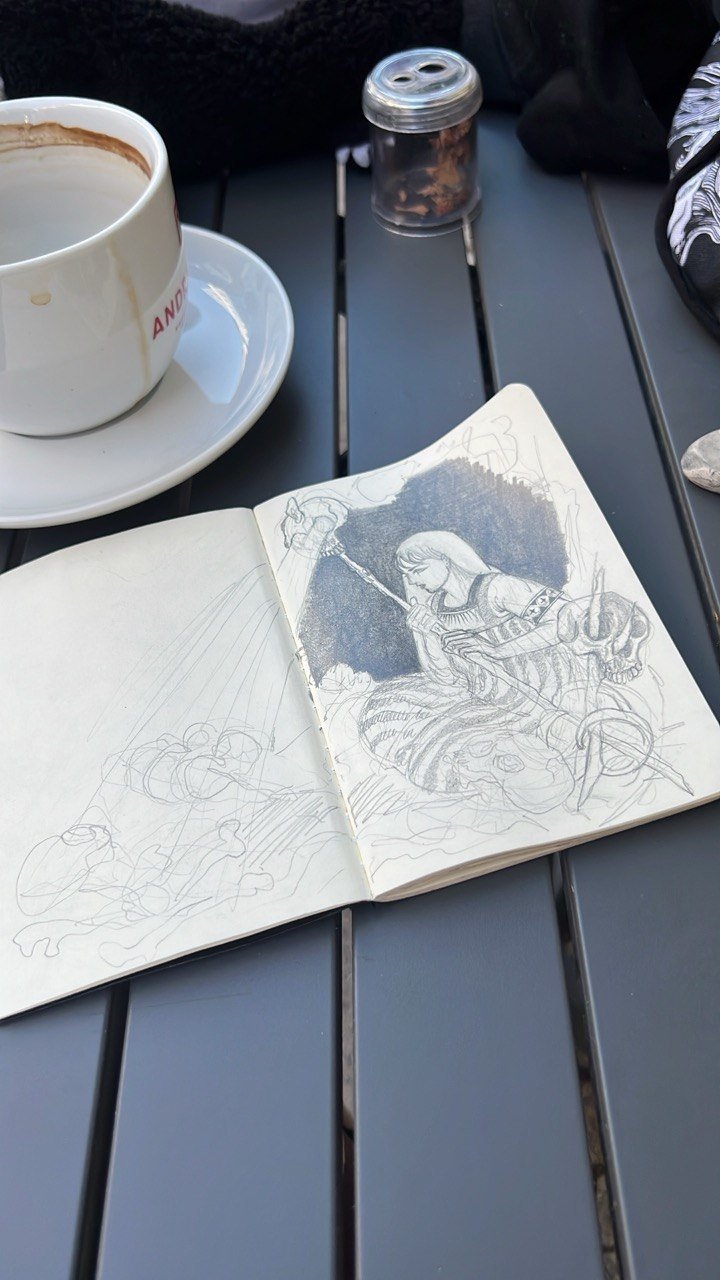
If things go well during those shared hours, I sometimes slip away to draw. A thousand other things still need doing. But drawing comes first. Every time I return from one of those little escapes, it feels as though a small part of the fog I had dissolved into begins to solidify again.
At the moment, I often cycle to the café Tales Untold on Comeniusplatz. Even the black coffee is surprisingly good there, and the separate tables make it a peaceful place to sketch.
Sometimes I’m lucky during my shift—like today. The baby lets me put them down and sleeps peacefully in their little bed until it’s time for another snack. Often, though, it doesn’t work at all. Then the baby wants to be carried. Not just any way—but in the one position that’s as uncomfortable as possible for me. And even that is only enough for a while. Soon the crying starts again, and I have to stand, walk, rock, sway…Over and over.
When the baby is content while I’m sitting down, it already feels like a small victory. And if I’m especially lucky, I might even have one hand free to doodle a little on my iPad. So, during my shift, I almost never get any real drawing done. Partly because my concentration is interrupted every few minutes. And partly because patience—and the mental space needed for creative work—evaporate when you’re caring for a fussy baby.